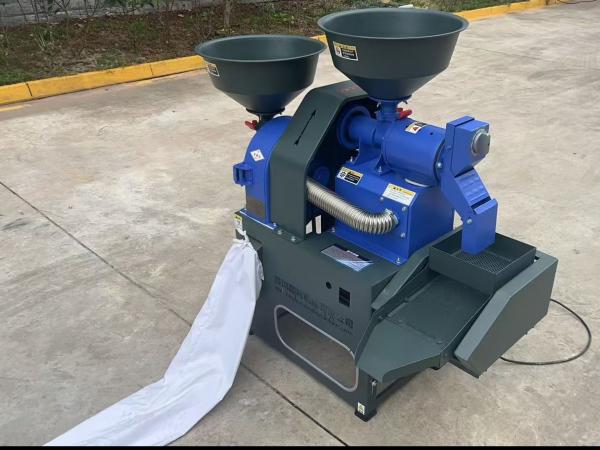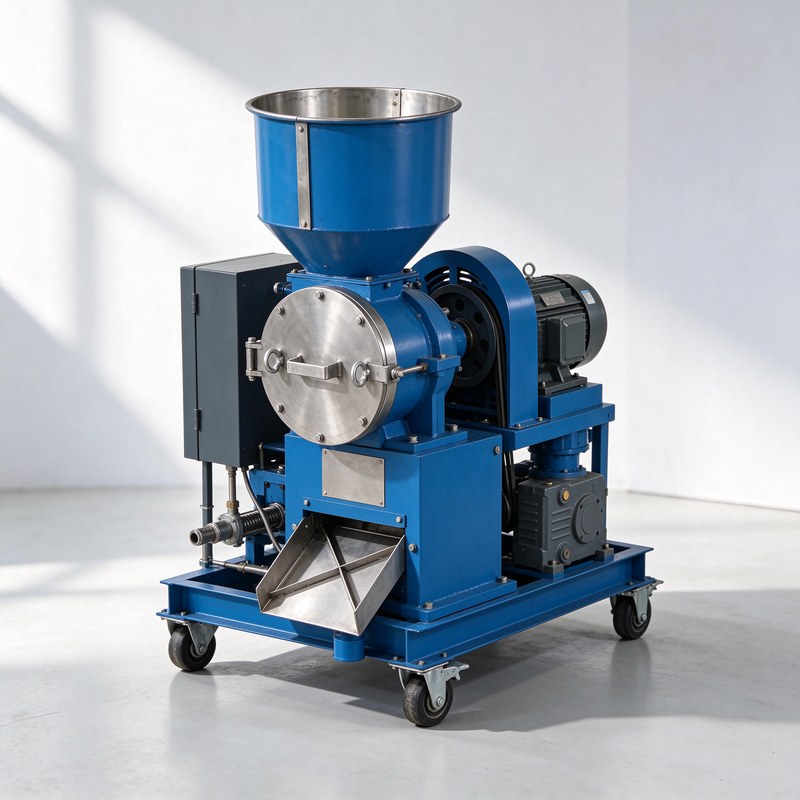
Feed pelleting has become one of the most important steps in modern animal husbandry. Whether you are running a small family farm with a few hundred broilers, a medium-sized pig operation, or a commercial feed mill supplying several customers, the physical form of the feed you deliver has a direct effect on how well your animals grow, how much feed is wasted, and how much money you keep at the end of the season. A feed pellet machine is the piece of equipment that makes this possible, and understanding what it actually does — beyond simply "squashing powder into little cylinders" — is the fastest way to choose the right model and get the most out of it.
Why pellet feed outperforms mash feed
Mash feed, the loose ground mixture that has been used for generations, has three practical weaknesses. First, animals are selective: they pick out the corn and leave the soybean meal, the minerals and the premix behind, so the ration they actually eat is not the ration you formulated. Second, loose powder is easily blown away, spilled from troughs, and lost in dusty air, which typically costs between five and fifteen percent of the total feed value. Third, powder is difficult to store and transport in bulk because it separates and compacts unevenly.
Pelleting solves all three problems at once. The heat, moisture and mechanical pressure inside the die gelatinise starch and denature proteins, which makes nutrients easier for the animal's digestive system to access. The result is a denser, more uniform product that can be handled, stored and transported efficiently, and that animals cannot sort through. In practice, producers who switch from mash to pellets commonly report improved feed conversion ratios, lower feed waste, and cleaner barns.
How a feed pellet machine works
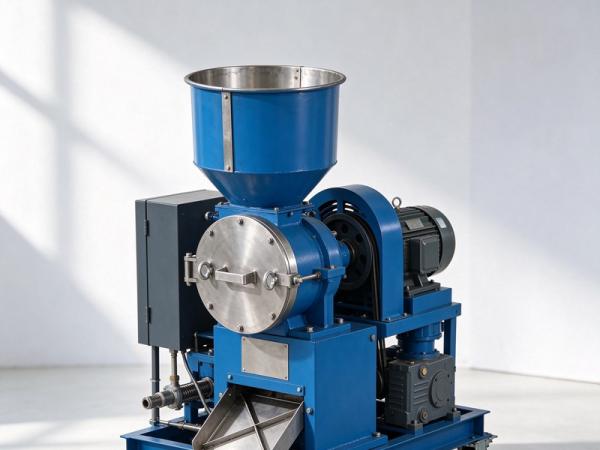
The working principle is straightforward, but the engineering behind it is not. Prepared raw material is ground to a suitable fineness and mixed to the required formula. The mixture is fed through the hopper, usually by a variable-speed screw feeder, into the centre of a circular die. Inside the die, two or three hardened rollers rotate against the inner surface of the ring die. Because the gap between the roller and the die is very small, the material is forced through the die holes under extremely high pressure.
As the material passes through each hole it is compressed into a dense, cylindrical strand. A set of adjustable knives mounted on the outside of the die cuts these strands to the required length. The finished pellets drop through the discharge chute, are cooled, and then bagged or stored. Everything that determines pellet quality — die hole diameter, die thickness, roller clearance, feed moisture, material fineness and knife setting — is under the operator's control. That is precisely why a well-designed machine matters: it gives you the range of adjustment you need to produce different pellet types for different animals.
Core functional features worth checking before you buy
1. Ring die and roller assembly
The die and rollers are the heart of the machine and the parts that determine both output and pellet quality. A properly hardened, precision-machined ring die keeps hole geometry consistent over a long service life, which means consistent pellet density from the first bag to the last. Rollers should be easy to adjust and easy to replace, because roller wear is the most common reason output drops over time. A machine that lets you set and check roller clearance quickly — ideally without dismantling the whole chamber — will save you hours of downtime every month.
2. Adjustable compression ratio and die thickness
Different feed types require different compression. Poultry and rabbit pellets are usually softer and thinner-walled, while cattle and sheep pellets need greater durability so they survive handling and outdoor feeding. Die thickness and hole diameter together define the compression ratio, and a good machine is designed so that dies can be swapped for different products or different customer requirements. Always confirm the available die options before ordering: a machine that only accepts one die configuration is a machine that can only make one product.
3. Consistent pellet diameter and length
Uniformity is what buyers notice first. Adjustable knives let you control pellet length, and a stable feeder speed plus a correctly set die ensure consistent diameter. Poorly controlled machines produce a mixture of dust, oversize lumps and broken pellets, which then has to be screened out and reprocessed — a hidden cost that shows up in your electricity bill and your labour hours rather than on the invoice.
4. Conditioning and moisture control
Many models include a conditioner that adds controlled moisture and, where available, low-pressure steam before pelleting. Conditioning raises the temperature of the mash, softens the starch, reduces friction in the die, and improves pellet durability while reducing energy consumption per ton. For producers who need high-durability pellets or who work with high-starch formulas, a conditioner is not a luxury — it is the difference between acceptable and excellent pellet quality.
5. Material handling from hopper to discharge
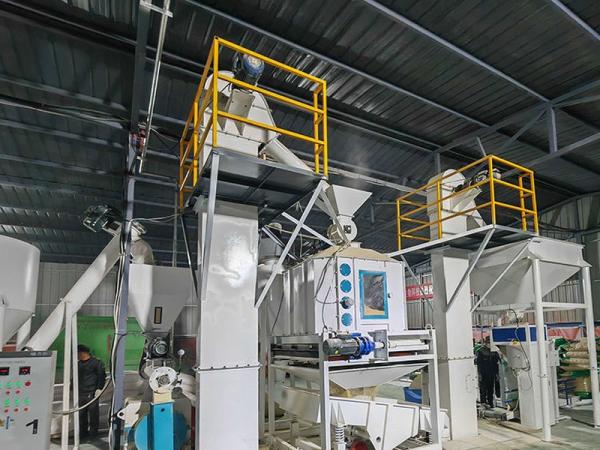
A practical machine handles material smoothly from start to finish: a hopper that does not bridge, a feeder that can be tuned to the die's capacity, and a discharge chute that neither clogs nor breaks pellets on the way out. Check whether you can add a conveyor, bucket elevator, cooler or bagging spout later, because most farms expand within two or three years of buying their first mill.
6. Drive, motor and power supply compatibility
Drive configuration is where export buyers need to be most careful. The same machine frame may be offered with different motor powers and different voltage and frequency options, and the correct combination depends entirely on the local grid. A unit specified for 380 V three-phase 50 Hz will not perform correctly on a 440 V 60 Hz supply, and a single-phase farm supply requires a different starting arrangement altogether. Always state your voltage, frequency and phase when ordering, and confirm whether a starter panel, overload protection and emergency stop are included.
7. Structural strength and vibration control
Pelleting is a high-load, continuous process, so the frame must be rigid enough to absorb vibration without loosening bearings or cracking welds. Balanced rotating parts, quality bearings and a solid base all contribute to a machine that runs steadily for years — on a farm where the mill may run several hours a day, this is the difference between routine maintenance and constant repair.
8. Safety and dust control
Every mill should have guarded belts and pulleys, a clearly positioned emergency stop, and main motor overload protection. Because organic feed dust is both a health and a fire risk, sealing and dust control around the hopper and discharge matter too. Ask specifically where the stop button sits relative to the feed inlet, since the operator stands right beside the hopper.
9. Easy maintenance and spare part availability
A well-designed machine opens for inspection in minutes, with dies and rollers that can be changed using standard tools. Spare part supply matters just as much: dies, rollers, knives, bearings and belts are consumables, and a supplier who cannot ship them promptly turns a two-hour job into a two-week shutdown. Ask which parts wear first and how fast they can be delivered.
What the machine lets you produce
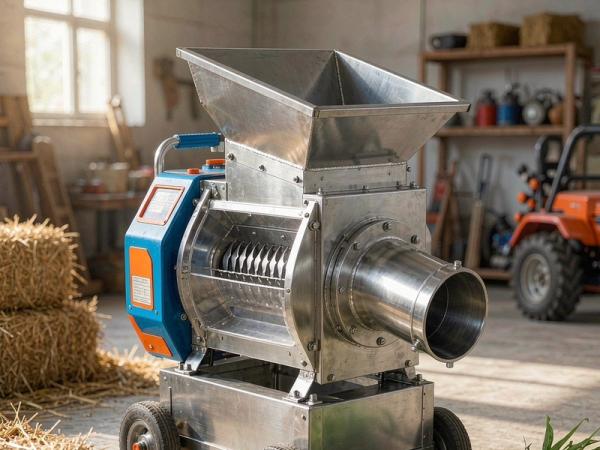
A single feed pellet machine with a suitable range of dies can serve a variety of animals and markets. Typical products include broiler and layer pellets, pig grower and finisher pellets, cattle and sheep pellets, rabbit pellets, and floating or sinking pellets for aquaculture when the process is set up accordingly. Many producers also use the same machine to pellet agricultural by-products such as straw, hay, alfalfa, corn stalks and peanut shells, turning low-value material into a storable, transportable resource. Because formulations and dies are interchangeable, one mill can support several product lines, and a farm that starts by feeding its own livestock can later supply neighbouring farms without replacing the core equipment.
Practical operation notes that protect pellet quality
- Grind fineness: finer grinding produces stronger pellets but costs more energy. A balanced particle size distribution is usually the best compromise.
- Moisture: mash that is too dry produces brittle pellets and heavy die wear; mash that is too wet causes clogging and mould risk in storage. Aim for a consistent, moderate moisture level and measure it rather than guessing.
- Roller clearance: too wide and material slips instead of being pressed through; too tight and wear accelerates. Check it as part of routine maintenance.
- Feed rate: running the feeder faster than the die can accept raises the motor load and produces soft, uneven pellets. Match feed rate to die capacity.
- Knife setting: a small adjustment here changes pellet length and therefore customer acceptance. Recheck after every die change.
Energy, cost and return
Pelleting is energy-intensive, and electricity is usually the largest running cost after raw materials. The main levers for reducing it are correct die selection, adequate conditioning, a properly matched motor, and avoiding the mistake of over-grinding material that does not need to be that fine. Because pellets reduce feed waste and improve conversion, the pelleting cost is normally recovered through better animal performance — so judge the investment on cost per kilogram of gain, not cost per ton of feed produced.
Choosing the right capacity
Capacity depends on die size, motor power, material properties and grinding fineness, so published figures are only a guide. Estimate your daily feed requirement, add a margin for growth and for the fact that real output is usually lower than the rated maximum, then choose a model that meets that demand without running at its limit every day. Buying one size up is far cheaper than replacing a machine pushed beyond its design capacity.
Conclusion
A feed pellet machine is not simply a shaping device. It is a process tool that improves feed hygiene, reduces waste, stabilises nutrition, and opens the door to producing and selling feed as a business. The features that matter most are the ones that give you control — an adjustable, well-made die and roller assembly, the ability to change compression for different products, honest motor and power specifications matched to your grid, solid construction, and dependable spare part supply. Get those right, and the machine will quietly pay for itself season after season.
If you are selecting a mill for your own farm or for distribution, tell us your animal type, target output per hour, local voltage and frequency, and the raw materials you intend to use. We will recommend the most suitable configuration and confirm the die options available for your products.