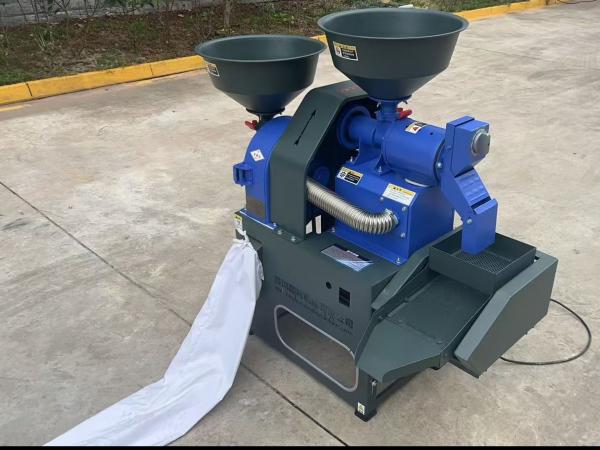
A feed pellet production line is not simply a pellet mill with a few attachments. It is a chain of machines that each take over where the previous one finishes: raw grain is crushed, weighed and blended, conditioned, pressed into pellets, cooled, screened and finally packed. Because each link in the chain sets the working conditions for the next one, the value of a line lies in how well its modules match one another — not in the size of any single machine.
What a line adds to a single pellet mill
Stand-alone mills are popular on small farms for obvious reasons: low cost, small footprint, and the freedom to pellet a single batch when needed. Once daily demand grows, however, three limitations appear. Material must be carried by hand from crusher to mixer to mill, which limits realistic output to a few hundred kilograms an hour. Formulations drift, because ingredients are measured by bucket rather than by scale. And pellets packed straight from the die carry too much heat and moisture, so they soften, break and eventually mould.
A proper line addresses these limitations structurally: it moves material mechanically, weighs it to a repeatable formula, gives it time and moisture in a conditioner, removes heat in a cooler, and screens out dust before bagging. The point of the equipment is not sophistication for its own sake, but consistency — the same pellet, bag after bag, week after week.
The modules that make up a working line
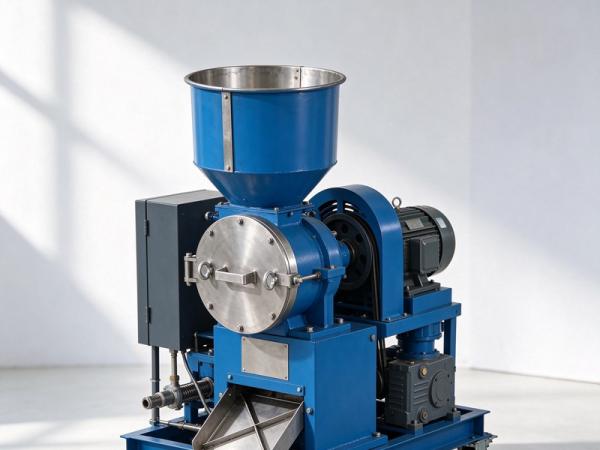
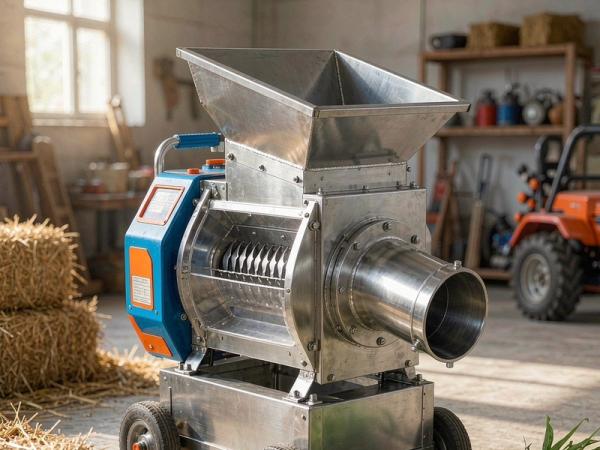
Crushing. A hammer mill reduces maize, soybean meal, bran, cakes and other ingredients to the chosen particle size. Screen aperture controls fineness; finer grinding improves pellet strength and digestion but costs energy and reduces throughput. A consistent moderate grind, with a well-maintained screen and a properly set hammer rotor, is usually the most economical compromise.
Conveying and elevating. Screw conveyors and bucket elevators move material between stages without manual labour, and their diameters and speeds are chosen to match the throughput of the machine they serve. Under-sizing here quietly caps the output of the whole line.
Storage and batching bins. Hoppers hold crushed material above the mixer or above the pellet mills, providing a buffer that lets upstream and downstream equipment run independently. Divided bins allow two products or two mills to be fed from one structure, and each outlet usually has a control gate so feed rate can be regulated individually.
Mixing. A ribbon or paddle mixer blends major ingredients with minerals, vitamins and premix to a homogeneous batch. Two settings dominate quality: weighing accuracy for small components, and correct fill level with adequate mixing time. An overfilled mixer never blends properly, regardless of running time.
Pelleting. The ring die and rollers press conditioned mash into pellets, and adjustable knives set the length. Capacity depends on die diameter and thickness, motor power, steam or water addition and the material being pressed — so a rated figure is a ceiling, not an everyday expectation.
Cooling and dust removal. A counter-flow cooler brings hot pellets down close to ambient temperature, firming them and preventing condensation inside the bag. A cyclone or bag filter attached to the cooler recovers dust and keeps the working area breathable.
Screening and packing. A vibrating screen separates finished pellets from fines, which are normally returned to the mill rather than sold as dust. The packer then fills 5, 25 or 50 kg bags with a repeatable weight.
Configuration A: a compact line for small and mid-size farms
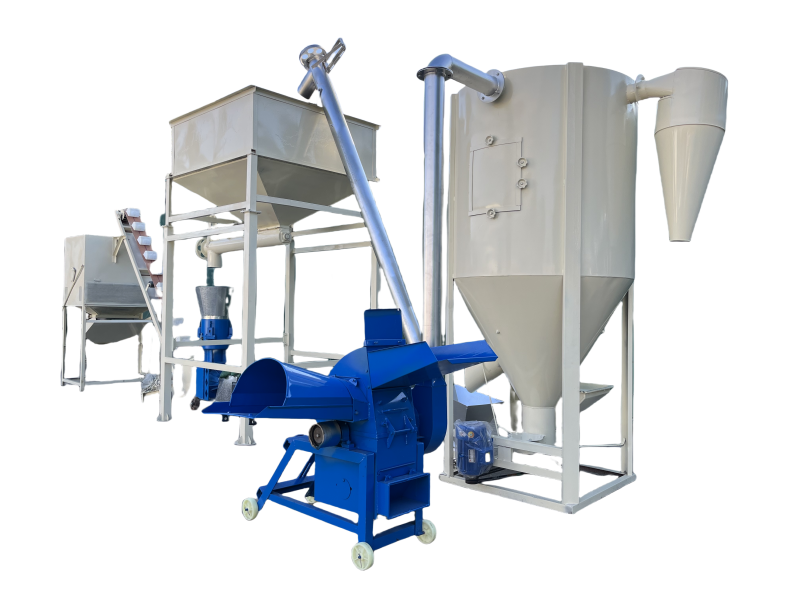
The photograph above shows one of the most practical configurations for a farm or a small commercial mill. A wheel-mounted hammer mill sits at the working level, where material can be shovelled in directly; a screw conveyor lifts the crushed mash from the mill outlet up to the mixing and storage bin; the bin discharges into the pellet mill below it; and the mill feeds a vertical cooler fitted with a cyclone separator. Each unit is small and individually visible, which makes maintenance straightforward and lets an operator see at a glance where a blockage or overload has occurred.
This arrangement is chosen for three reasons. It requires only modest headroom, so it can be installed in an existing shed rather than a purpose-built tower. The screw conveyor can be angled to suit the building layout, and its length is easily adjusted when equipment is moved. And the individual machines — mill, conveyor, bin, cooler — can be bought in stages, so a producer can begin with crushing and pelleting and add mixing or cooling later without scrapping what is already there.
Typical outputs for this class are in the range of roughly 300 to 1,000 kg per hour, depending on die size and motor power, which suits a few hundred to a few thousand animals or a small feed business serving nearby farms. The main limitation is that one mill means one product at a time: switching between a fine poultry pellet and a larger cattle pellet requires a die change and a clean-down, so product changeovers interrupt production.
Configuration B: twin mills under shared bins for higher output
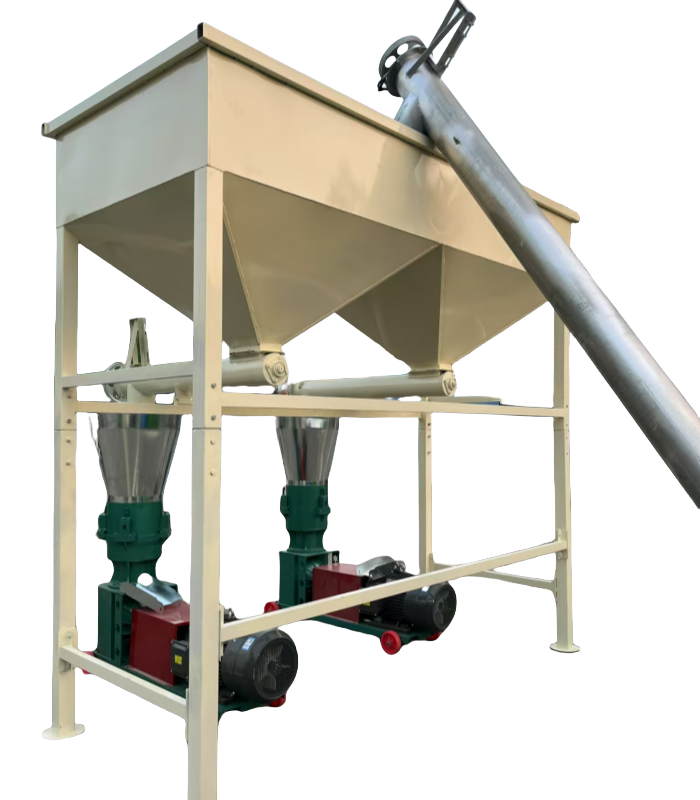
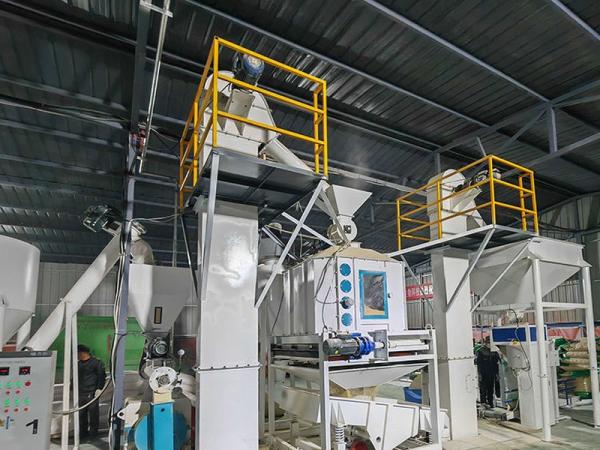
The second photograph shows a different approach: a divided storage bin on a steel frame, fed by an inclined screw conveyor, with two independent pellet mills mounted underneath. Material is distributed to each mill through a control gate, so both units can run together or one can be stopped independently. The visible reduction in changeover time is the practical advantage: one mill can produce poultry pellets while the other runs cattle pellets, or both can run together to reach a higher combined output without buying a single very large machine.
Redundancy is the second advantage, and it matters more than buyers expect. Pelleting is a wearing process — dies, rollers and bearings have a finite life. With two mills, a die change or a roller adjustment on one unit does not stop the whole line; production continues at reduced rate while maintenance is performed. On a farm where feed must be delivered on a fixed schedule, that flexibility frequently decides whether the configuration is viable.
The trade-offs are equally clear. Two motors mean higher connected load, so the incoming supply, cabling and protection must be sized for both running at once. The structure must carry two machines plus bins and be stiff enough to limit vibration. And the operator needs a clear routine for balancing feed between the two units, because running one mill nearly empty while the other is overloaded wastes energy and produces uneven pellet quality.
Capacity: the number that governs every other choice
Output is set by the smallest stage in the chain. A common and expensive mistake is to size the pellet mill for the target output while leaving the crusher, cooler or packer smaller, so the line runs at the pace of its weakest module. Before ordering, ask for a stage-by-stage capacity table — crushing rate, conveying rate, mixing batch size and cycle time, pelleting rate per die, cooling retention, screening and packing rate — and check that each figure is comfortably above the daily target.
Two further corrections are worth applying to any published capacity. First, real output is usually below the rated maximum, because material properties and moisture vary and because operators do not run machines at their limit continuously. Second, downtime for die changes, cleaning and maintenance must be subtracted from the available hours. A line rated at 1,000 kg per hour should not be planned to deliver 8 tons in an eight-hour day.
Power supply, foundations and installation
Motor voltage, frequency and phase must match the local grid, and the starting method for the largest motor must be confirmed with the supplier. Where supply is weak or unstable, a stabiliser or generator is part of the project rather than an afterthought. Foundations and steel structures carry real vibration load: a machine bolted to a slab that is too thin will loosen, drift and eventually damage bearings. Plan headroom for the elevator or conveyor, access for die changes, and space for bag storage before the equipment arrives, not after.
Operation and maintenance rhythm
- Each shift: check roller clearance, knife position, belt tension and bearing temperature; confirm the die is clean before start-up.
- Each die change: inspect the die for wear and blockage, reset knives, and re-check the feeder setting against the new die.
- Weekly: clean the cooler, check the cyclone and filter, inspect screens for holes and the hammer mill for worn hammers.
- Consumables: keep dies, rollers, knives, screens, bearings and belts in stock. The line's real availability depends on how fast a worn part can be replaced.
A short selection checklist
Confirm the animal types and pellet sizes you intend to produce; state target output per hour and how many hours per day the line will realistically run; list main raw materials and their moisture; specify voltage, frequency and phase; decide whether steam is available or water conditioning is sufficient; and agree who supplies steel structure, cabling, piping and civil works. A supplier who answers these points with a stage-by-stage configuration and a layout drawing is a supplier worth continuing with.
Conclusion
A feed pellet production line earns its cost through consistency: stable formulas, uniform pellets, low waste and predictable output. Whether you choose a compact single-mill arrangement like the first photograph or a twin-mill configuration under shared bins like the second, the deciding factors are the same — every stage sized for the one after it, power supply matched to the machines, structure solid enough for the vibration, and a maintenance routine that keeps dies and rollers in condition. Get those right, and the line becomes a dependable part of the daily operation rather than a source of repairs.